
Omniheroes
Luchen NetworkRole Playing
4.52.26K Reviews
- Version
- 2.60.0
- Installs
- 1.00M
- Age Rating
- Teen
Screenshots
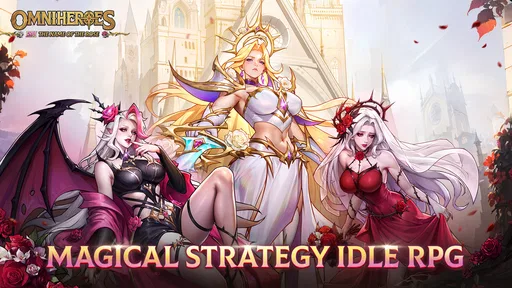
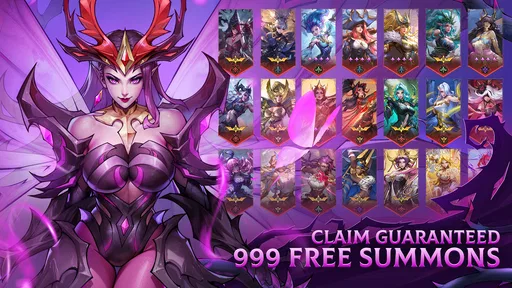
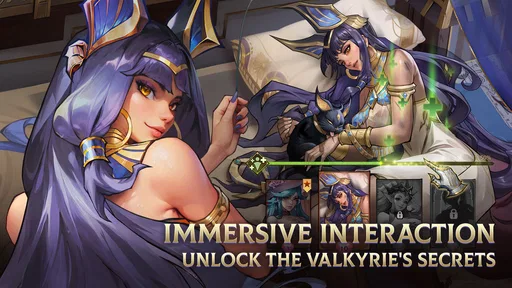

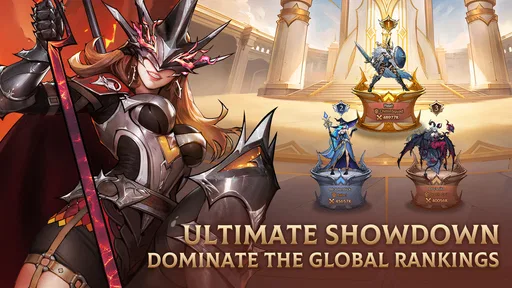
Our Review of Omniheroes
 Analysis by Appyee
I spent time with Omniheroes, a free fantasy strategy role-playing game from Luchen Network, and the feature that stayed with me was its Valkyrie-collection focus. The basic idea is easy to understand: rescue these heroes, build a team around them, and use planning rather than reflexes to push through battles. That sounds familiar on paper, but the way a growing roster changes your decisions is what gives the game its strongest appeal.
This is not the sort of RPG I would choose when I want precise movement, fast reactions, or a large world to explore manually. It is much closer to a roster-management game with fantasy presentation. I spend more time deciding which characters belong together, improving the right units, and adjusting my approach to a difficult encounter than I do controlling every attack. For players who enjoy turning a collection into a working team, that emphasis can be satisfying. For anyone who dislikes repeated battles, menus, or gradual progress, it may feel slow.
The game has built a sizeable audience, with an average rating of 4.5 from around 99 thousand ratings and more than a million installs. Those figures suggest that its central loop connects with many mobile players, but they do not remove the need to understand its rhythm. The important question is not simply whether collecting Valkyries sounds attractive. It is whether you enjoy making small strategic decisions repeatedly and accepting that progress is tied to a long-term roster.
Why the Valkyrie collection is the real center of the experience
I see the Valkyrie collection as the point where Omniheroes’ goals, unlocks, and battles come together: each recruit can prompt a fresh look at the team you already rely on. That makes the collection more interesting when you treat it as a set of possible answers, not a checklist to complete. The next section looks at how that idea can shape ordinary play.
Rescuing heroes changes the way I think about progress
The most meaningful capability here is not just owning more characters. It is the way each new Valkyrie can change the value of the team I already have. A new recruit is potentially a damage dealer, a defensive solution, or the missing piece in a combination that was previously too fragile. That makes collecting feel more purposeful than simply filling a gallery.
I found myself looking at the roster in two different ways. First, I considered whether a character was useful immediately. Then I thought about whether that character could become useful after more investment or in a different team arrangement. This distinction matters because a collection game can become frustrating when every new unit feels like a replacement for the last one. Here, the more interesting decisions come from asking where a Valkyrie fits rather than automatically treating the newest addition as the best option.
The fantasy setting helps make that process readable. The Valkyries give the roster a clear identity, so building a team feels more memorable than comparing anonymous cards or interchangeable soldiers. I could remember why I was saving resources for a particular character, and that personal attachment made the slower parts of progression easier to tolerate.
The practical strength is roster flexibility, not collection for its own sake. A larger group gives me more ways to respond when a familiar team stops working. That is especially useful for players who enjoy experimenting. If you prefer one permanent squad and do not want to revisit your choices, much of the game’s appeal will be lost.
Strategy comes from decisions between battles
Because the game is a strategy RPG, the important work often happens before the fight begins. I pay attention to which heroes I am developing, how much attention I am giving to a main group, and whether a new Valkyrie deserves resources now or later. Those choices are more consequential than tapping quickly during combat.
This creates a useful separation between short sessions and longer planning sessions. I can check progress, make a small roster adjustment, and leave without needing a large uninterrupted block of time. When I have more patience, I can examine why a team is failing and decide whether the answer is a different lineup or simply better development of the characters I already own.
That structure also makes mistakes more noticeable. Spending too much effort across a wide roster can leave the main team underdeveloped. On the other hand, investing only in a narrow group can make the game less adaptable when a different challenge favors another arrangement. I would not call this a game where every decision is permanent, but it does reward having a plan instead of improving units at random.
A collection is more useful when I give it a job
One of the better habits I developed was assigning each Valkyrie a purpose before deciding how much attention to give her. I asked whether she was intended for my everyday team, a backup composition, or future experimentation. This prevented me from treating every character as an urgent project.
That approach is particularly helpful early on, when resources and attention feel limited. Rather than trying to make the entire roster equally strong, I would first stabilize a dependable group. After that, I could use additional characters to solve specific problems or test a different style. The result was less confusion in the upgrade screens and fewer moments where I wondered why my main team had stopped improving.
My advice is to avoid building a team purely from the Valkyries you like most visually. The fantasy presentation makes that temptation strong, but a favorite character may not solve the problem in front of you. I would keep personal favorites involved when possible, while still allowing the team’s needs to decide who receives the most investment.
How the collection works in everyday play
In everyday sessions, I find it useful to give a new Valkyrie a clear question to answer: does she strengthen my current lineup, offer a backup, or simply belong on a list to revisit later? That small pause can prevent scattered investment and make a short visit feel purposeful. It also leads naturally to the kind of routine that suits the game best.
A short daily session can still feel productive
A realistic use case is a commute, a lunch break, or a few minutes at home when I want progress without starting a demanding game. I can open the game, check what has become available, improve a character, and attempt the next challenge. That makes it easier to fit into a busy day than an RPG that expects constant manual control.
The key is to enter with a small goal. I might focus on strengthening the core team, checking whether a newly rescued Valkyrie fits a current lineup, or trying to move past one obstacle. If I open the game without a plan, I can drift through several menus and leave feeling that I have done a lot without making a meaningful decision.
This is where the collection feature has a practical effect. Even a brief session can involve a real choice, such as whether to improve a dependable character or prepare a secondary option. The session is not valuable because it is long; it is valuable when the roster becomes clearer afterward.
Building a first team without wasting attention
For a new player, I would begin with a compact core rather than trying to develop every rescued Valkyrie. The strongest early habit is to identify the group that carries regular progress and keep its development consistent. Once that team feels reliable, I would start testing alternatives one at a time.
Changing several characters at once makes it difficult to understand what helped. If a new lineup succeeds, I may not know whether the improvement came from one Valkyrie, a different combination, or simply stronger development. Testing one change at a time gives the collection a clearer strategic purpose and helps me learn the roster without turning every battle into guesswork.
I also recommend keeping a small reserve of usable characters instead of putting everything into one group. This does not mean spreading resources evenly. It means avoiding a situation where one setback leaves me with no practical alternative. The best balance is a strong main team supported by a few characters that can be developed when a different approach becomes necessary.
When a new Valkyrie is exciting but not immediately useful
One trade-off of a collection-driven RPG is that a new character can be appealing without being the right next investment. I have to separate the excitement of unlocking someone from the question of whether my account can support that character properly. If I improve every new arrival immediately, my progress becomes scattered.
I prefer to pause after obtaining a Valkyrie and assess three things: whether she addresses a current weakness, whether she can join a team I already understand, and whether developing her would delay a more urgent improvement. This small pause makes the collection feel less like a shopping list and more like a strategic toolbox.
It also reduces disappointment. A character does not have to transform my team on the first day to be worthwhile. Sometimes the value is having another option later. That long view suits the game, but it may not suit players who expect every reward to produce an immediate and dramatic upgrade.
The best scenario for playing Omniheroes
For me, the most comfortable way to play is to use brief visits for straightforward progress and save roster experiments for a calmer moment. That separates routine upkeep from decisions that deserve more thought, without making every session feel like homework. The following section considers the costs of that measured approach as play continues.
It fits players who enjoy planning around a growing roster
I think the game works best for someone who likes the middle ground between a traditional RPG and a collection game. You receive the satisfaction of developing named fantasy heroes, but the main activity is still comparing options and shaping a team. The game is a good match if I want to make progress in short visits while keeping a longer-term plan in mind.
It is also suitable for players who enjoy revisiting decisions. A difficult stage is not always a signal that I need a completely new character. It may be a reason to reconsider the lineup, improve a neglected role, or stop investing in a unit that is not helping the current plan. That kind of problem-solving gives the battles more meaning than simply pressing an automatic retry.
The game’s Teen content rating is worth keeping in mind for families. I would not present it as a simple children’s game, especially because the collection and purchase elements can encourage ongoing engagement. Parents should be comfortable with the fantasy combat tone and with supervising spending choices before handing it to a younger player.
A useful routine for a busy player
My preferred routine would be to use short sessions for maintenance and reserve a quieter moment for strategic changes. During a quick visit, I would collect available progress and improve the team I am currently using. Later, I would compare the roster and decide whether a new Valkyrie deserves a test.
This rhythm avoids making rushed decisions. It also keeps the game from taking over every spare moment. The collection loop can encourage constant checking, but the actual strategic benefit of opening the game repeatedly is limited if I am not ready to make a considered change.
For that reason, I see it as a better companion game than a single all-day RPG. It gives me something to think about between longer activities, but it does not replace the feeling of direct exploration or action-focused play.
Trade-offs that become clearer after longer use
The collection can keep planning fresh, but it can also make choices feel less decisive: more options do not always mean an obvious next move. I find it helps to judge a character by the problem she might solve rather than by the excitement of a new unlock. That distinction points to the players most likely to enjoy this system.
The free entry point does not mean the whole experience is frictionless
The game is free to download and play, but it includes in-app purchases ranging from $0.99 to $99.99 per item. That range is important because collection games naturally make players curious about speeding up progress or obtaining more options. I would approach the purchase system carefully and decide in advance whether I am playing entirely without spending or setting a firm limit.
My main concern is not that optional purchases exist. It is that the desire to improve a roster can make spending feel like a shortcut to a strategic problem. If a team is weak because I have invested poorly, obtaining something new may feel attractive even when the better solution is to understand the characters I already have.
Players who want a completely predictable, one-time-cost experience should look toward a premium RPG instead. That type of game usually offers a clearer spending boundary. Omniheroes is better suited to someone who accepts a free-to-play structure and can treat purchases as optional rather than necessary.
Roster depth can become decision fatigue
The same collection system that creates variety can also make the game feel busy. As the number of Valkyries grows, I have more possibilities but also more reasons to hesitate. It is easy to spend time comparing units without reaching a clear conclusion.
I found that setting a simple rule helped: keep one main team, one experimental team, and a short list of characters worth revisiting. This keeps the roster manageable without throwing away the pleasure of collecting. It is a personal organization method rather than a game feature, but it makes a real difference to the experience.
Players who enjoy optimizing every detail may appreciate this complexity. Players who want the game to tell them exactly what to use may find it tiring. The title gives me room to make choices, but that also means I am responsible for handling the clutter those choices create.
It does not replace a hands-on action RPG
I would not recommend this game to someone whose priority is direct combat. The Valkyrie theme may suggest heroic action, but the appeal comes from team construction and progression rather than precise control. If I want to dodge attacks myself, explore a physical world, or feel that every victory depends on my reflexes, I would choose a different kind of mobile RPG.
Likewise, players who dislike repeated progression loops may lose interest. The game asks me to accept gradual improvement and to revisit the roster when progress slows. That can be relaxing when I am in the right mood, but it can feel repetitive when I want a tightly paced adventure with a clear ending.
The current version is 2.60.0 and supports devices running Android 7.0 or later. That makes the entry requirement fairly approachable for compatible Android users, although device compatibility alone does not determine whether the game’s style will suit someone. The more important question is whether the player enjoys collection-driven planning.
Who gains the most from its Valkyrie system
I think the Valkyrie system suits players who enjoy connecting a new recruit to a practical team-building decision, even when the payoff takes patience. It is less compelling for someone who wants every unlock to be an immediate upgrade or prefers combat to roster planning. The closing section weighs that difference when deciding whether this style is a good fit.
Best for patient team builders
The strongest audience is made up of players who enjoy watching a roster mature. I like the feeling of recognizing a weakness, finding a possible answer among my Valkyries, and gradually turning that answer into a dependable part of the team. The reward is not only the unlock itself; it is understanding why that character matters.
It is also a good choice for people who prefer flexible sessions. I can play briefly without losing the thread, then return later when I have enough time to think about a harder decision. That makes it more approachable than a game that demands constant attention, while still giving me something to plan beyond the next battle.
Fans of fantasy character collections should find the theme appealing, especially if they want the collection to influence team decisions. The Valkyries are not merely decorative additions in my experience; their value comes from how they affect the choices surrounding the rest of the roster.
Who should probably skip it
I would steer away from it if I wanted a fully manual combat game, a premium experience without purchase pressure, or a very short campaign that reaches a definite conclusion. I would also hesitate to recommend it to someone who tends to spend impulsively in collection games. The free starting point is inviting, but the long-term structure rewards self-control.
Players who become frustrated when a new character is not instantly useful may also struggle. The game makes more sense when I view each Valkyrie as part of a developing plan rather than as an automatic upgrade. That patience is central to enjoying it, not an optional extra.
My final recommendation
After using it as a roster-focused fantasy RPG, I see Omniheroes as a solid choice for players who want their main decisions to happen in team building. Its best quality is the way rescuing Valkyries gives me reasons to reconsider how my group works, rather than simply pushing me through a fixed sequence of battles.
I would recommend starting slowly, building a dependable core, and resisting the urge to invest in every new character at once. That approach reveals the game’s strongest layer: the trade-off between immediate progress and future flexibility. It also makes the free-to-play structure easier to manage, because I am less likely to chase a solution before understanding the problem.
For me, the title works when I treat it as a long-term strategy hobby rather than a traditional action adventure. The 4.5 average and broad player reach make its appeal easy to understand, but the personal fit depends on patience. If you enjoy collecting fantasy heroes, testing combinations, and making progress through deliberate roster choices, it is worth trying. If you want direct control, a fixed-price game, or constant novelty, another RPG will probably serve you better.
Verdict
Strengths of Omniheroes
- Large roster of heroes with varied skills and team roles.
- Frequent events provide extra rewards and limited-time challenges.
- Idle rewards let you progress even when you are not actively playing.
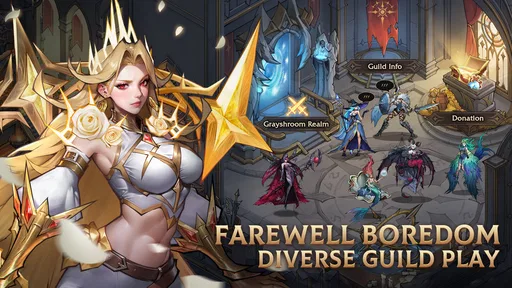
- Guild features add teamwork, social interaction, and shared objectives.
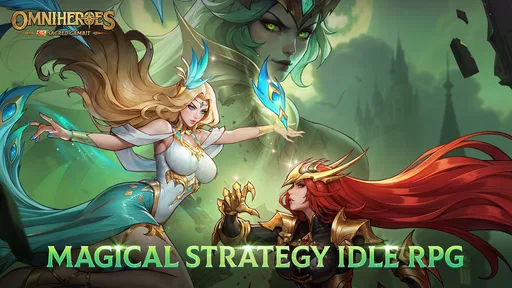
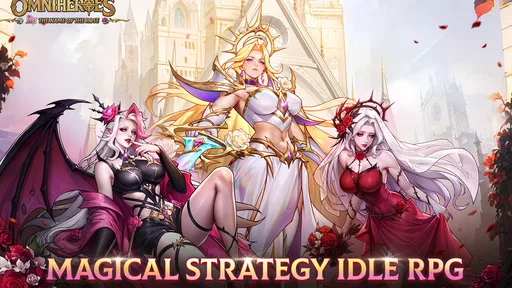
- Stylish character designs and polished skill animations enhance battles.
Limitations of Omniheroes
- Progress can become heavily dependent on duplicate heroes and upgrades.
- Premium currency and summon resources are limited without regular grinding.
- Combat may feel repetitive once familiar team combinations are established.
- Many menus, events, and systems can overwhelm new players at first.
- Competitive modes may favor players who spend more on powerful heroes.
Similar Picks in This Category
View All
Hair Dye
CrazyLabs LTD4.4

Monster High™ Beauty Salon
CrazyLabs LTD4.5

Bus Simulator - Bus Games 3D
Jima Apps4.4

Flight Pilot: 3D Simulator
Wildlife Studios4.1


Super Stylist Fashion Makeover
CrazyLabs LTD4.4
Frequently Asked Questions
What is Omniheroes?
Omniheroes is a fantasy idle RPG for Android and iOS that combines collectible heroes, turn-based battles, and automated progression. You assemble teams from different factions and classes, improve their equipment and abilities, and send them into campaign stages, events, and competitive modes. Battles continue with limited input, making it suitable for players who enjoy character collection without managing every action manually.
Is Omniheroes free to download and play?
Yes, Omniheroes can generally be downloaded and played for free, although it includes optional in-app purchases. These purchases may provide premium currency, summons, upgrade materials, bundles, or faster progression. The game also uses advertisements or reward-based offers in some areas, depending on the current version and region. Players who avoid spending can still progress, but advancement may require more patience and daily activity.
Does Omniheroes require an internet connection?
Omniheroes is primarily an online game, so an internet connection is normally required to access the main features, synchronize progress, claim rewards, participate in events, and compete in online modes. Offline play is not its main focus. A stable Wi-Fi or mobile-data connection is recommended, particularly during account synchronization, updates, battles involving server features, and purchases.
Is Omniheroes suitable for beginners and casual players?
Omniheroes is relatively accessible for beginners because combat is largely automated and the early stages provide tutorials, free summons, and introductory rewards. Casual players can make progress by completing daily tasks and collecting idle rewards. However, the number of heroes, factions, upgrade systems, and team combinations can feel overwhelming at first, while long-term progression rewards consistent play and careful resource management.
What should I know about spending and progression in Omniheroes?
Progression in Omniheroes depends on collecting duplicate heroes, improving levels and equipment, unlocking skills, and building teams with useful faction or role combinations. The game offers many rewards through campaigns, events, and daily activities, but premium currency and summoning resources are limited for free players. Before spending, compare bundles carefully and remember that stronger results often depend on long-term planning rather than one purchase.
Play our best games!


